What is a lien on a car?
Avoid getting stuck with someone’s debt.
Roughly 40% of used vehicles checked by CARFAX Canada have a registered lien.1
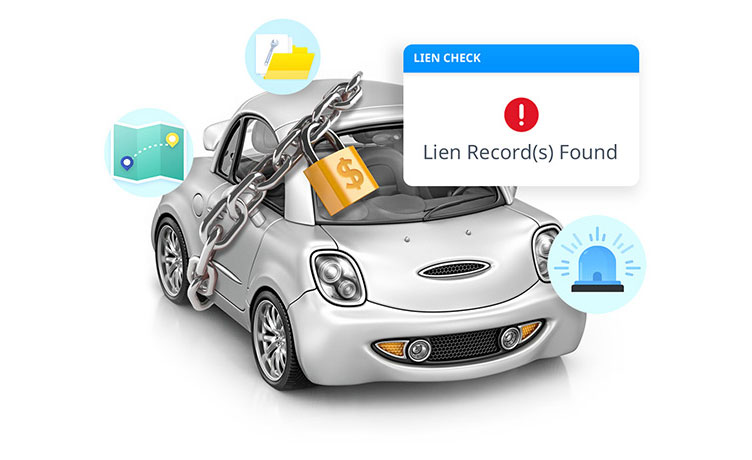
A lien on a car is a legal claim registered against a vehicle by a lender when money is borrowed to purchase it. This means the borrower may still owe money back to the lender. If you buy a car with a lien that has not been cleared, the lender could take possession of the vehicle.
How do I check if a car has a lien?
To check if a car has a lien, you may need to search government records in each province and territory where the vehicle has been registered.
A nationwide lien search2 is included with every CARFAX Canada Vehicle History Report + Lien Check.
CARFAX Canada uses the VIN (Vehicle Identification Number) to search government records in each Canadian province and territory (excluding Northwest Territories) where the vehicle is currently and has historically been registered.
What will a CARFAX Canada Vehicle History Report + Lien Check show if there is a lien found?
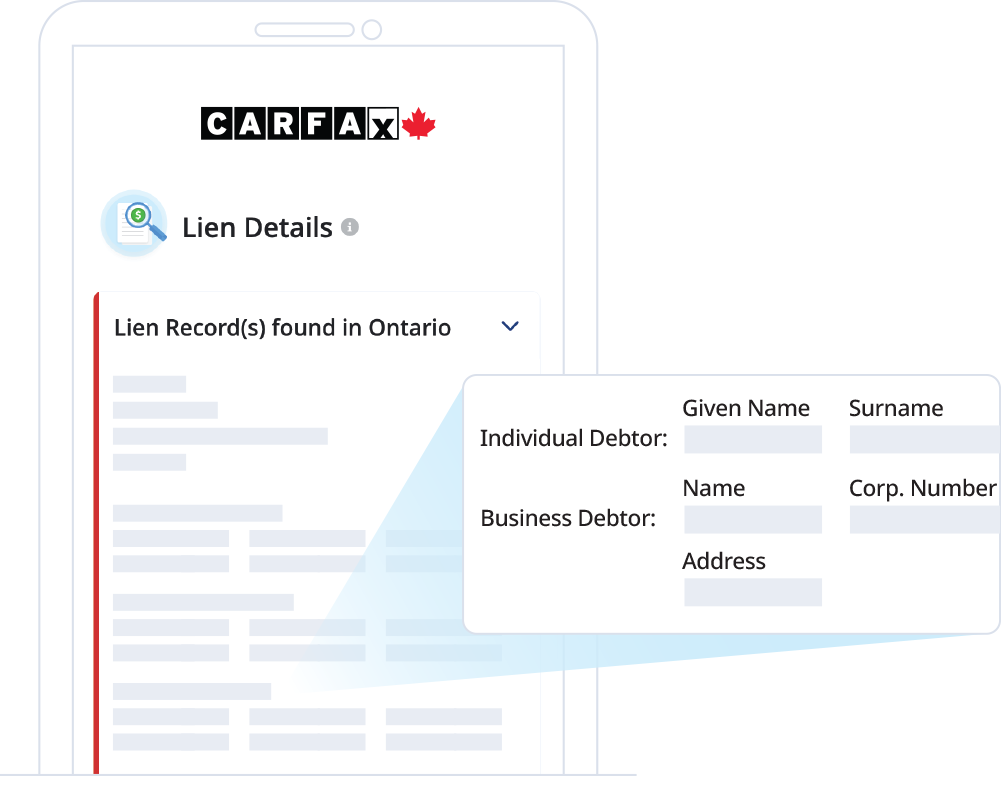
If a lien is found, the CARFAX Canada Vehicle History Report + Lien Check will include critical information to help you better understand the lien, including:
- Debtor information: Name and address of the individual or business that owes the money
- Secured party: Name and address of the lender or financing institution
- Registration agent: The individual that registered the lien on behalf of the lender
- Collateral classification: Confirms that the lien is tied to the vehicle in question
A lien doesn’t necessarily mean you shouldn’t buy the car, but it does mean you need to ensure the debt is cleared before taking ownership.
Get peace of mind when it comes to liens.
A CARFAX Canada Vehicle History Report + Lien Check searches billions of data records so you can avoid costly hidden problems, like getting stuck with someone's debt.
Nationwide lien check2
Accident history
Registration records
Open recalls
Stolen vehicle check
Import & export records
Service records
and more
Frequently Asked Questions
-
If you’ve already sealed the deal on a used car and it has an active lien, it’s important to contact the seller and lender to inquire about the lien. You can find their information in the CARFAX Canada Vehicle History Report + Lien Check.
You should first request that the seller pay off the lien and provide a lien release letter. If the seller refuses or cannot be reached, you may need to consider legal action or, as a last resort, pay off the lien yourself to obtain a clear title.
-
A lien holder is typically a bank or financing institution that provides a loan when a vehicle is purchased. The lien holder may register a lien against the vehicle as security or collateral for the money they loaned. If the debt isn’t paid back, they may be able to repossess the vehicle.
-
A lien release letter is an official document from the lien holder (such as a bank or financing institution) confirming that the loan has been fully paid, and that they no longer have a legal claim on the vehicle.
-
As the buyer, request that the current vehicle owner pays off the lien and provides a lien release letter before you take ownership. You can find the owner and lender’s information in a CARFAX Canada Vehicle History Report + Lien Check. As the seller, ensure that any debt owed on the vehicle is fully paid and obtain a lien release letter before proceeding to sell it.
-
A lien doesn’t necessarily mean you shouldn’t buy the car, but it does mean you need to ensure the debt is cleared and the lien is discharged before taking ownership. Use the owner and lender’s information found in a CARFAX Canada Vehicle History Report + Lien Check to request that the current vehicle owner pays off the lien before you take ownership.
1 Based on data found on CARFAX Canada Vehicle History Reports ordered in 2025, with a Lien Check.
2 CARFAX Canada will search for liens in each province or territory in Canada (excluding Northwest Territories) in which the vehicle (identified by its VIN) (i) is currently registered; and (ii) has historically been registered.
